76 Allds St, Nashua, NH 03060
By Nashua Smile Makers | May 19, 2026
When you lose a tooth or several teeth, the decision in front of you feels straightforward. One option looks manageable. The other looks intimidating. Most people choose what feels safer in the moment, and most people who make that choice spend years wishing someone had explained a few things to them before they did.
Dr. Salvatore Guerriero at Nashua Smile Makers has had this conversation with patients many times. People who chose dentures years ago and are now sitting in the chair asking whether dental implant treatment is still an option for them. The answer is often yes, but the conversation they needed was the one nobody had with them at the beginning.
The Decision Most People Make Without All the Information
Dentures have been around for centuries. They are familiar, they are widely available, and when a dentist presents them alongside dental implant treatment, the denture option can feel like the obvious practical choice. No surgery, less involved, and done relatively quickly.
What most patients do not hear clearly enough in that moment is what happens to their jaw over the years that follow.
When a tooth is lost, the jawbone beneath it begins to shrink. This happens because bone tissue requires stimulation to maintain its density, and that stimulation comes from the pressure of a tooth root during chewing. When the root is gone, the bone no longer receives that signal and begins to resorb, meaning it gradually reduces in both height and width.
Dentures do not stop this process. In fact, the pressure of a denture resting on the gum can accelerate bone loss in some patients. Year by year, the jaw changes shape, and the denture that fit well at first begins to feel loose, uncomfortable, and unreliable. The adhesives come out. The relines become more frequent. And the facial structure begins to change in ways that make patients look older than they are.
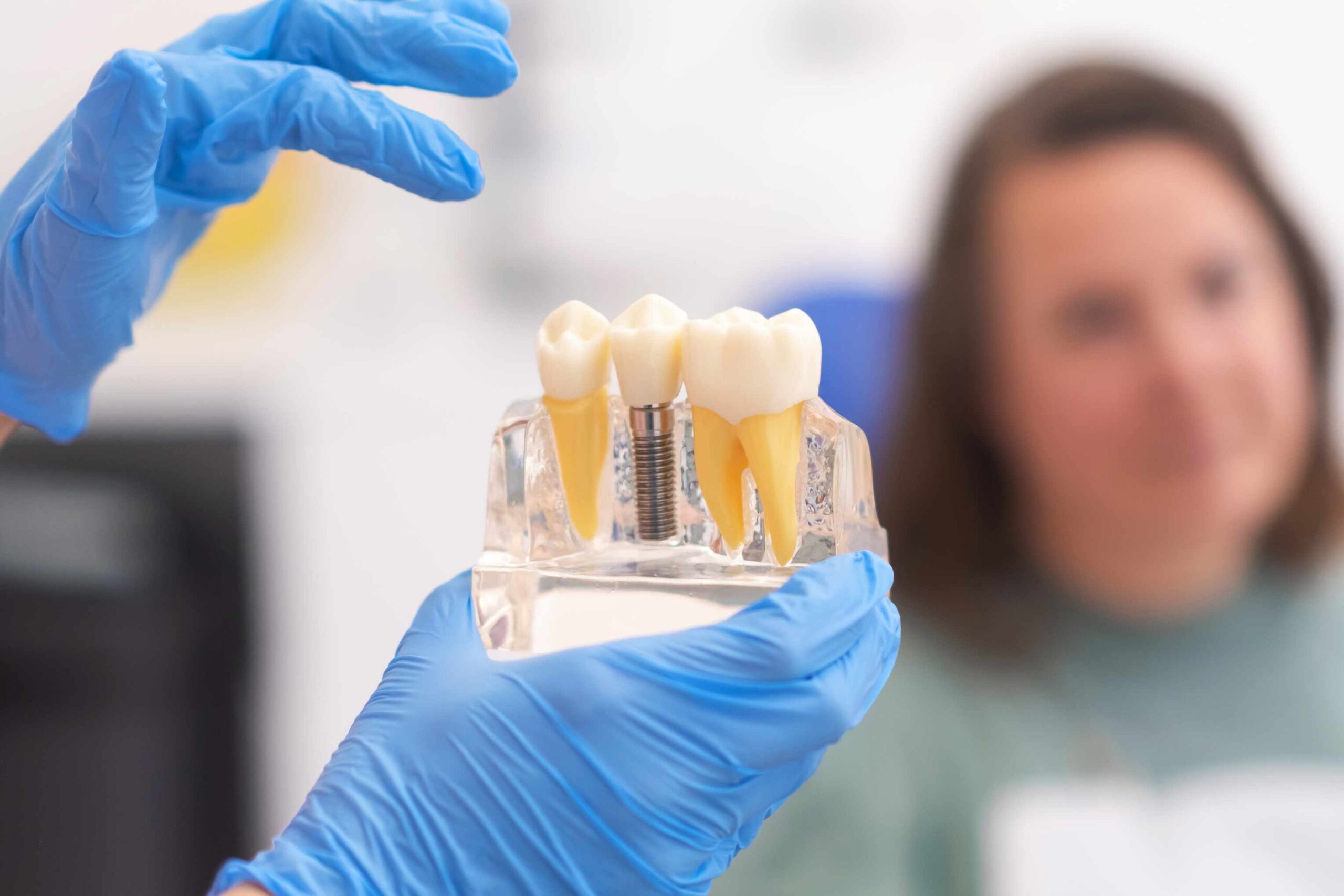
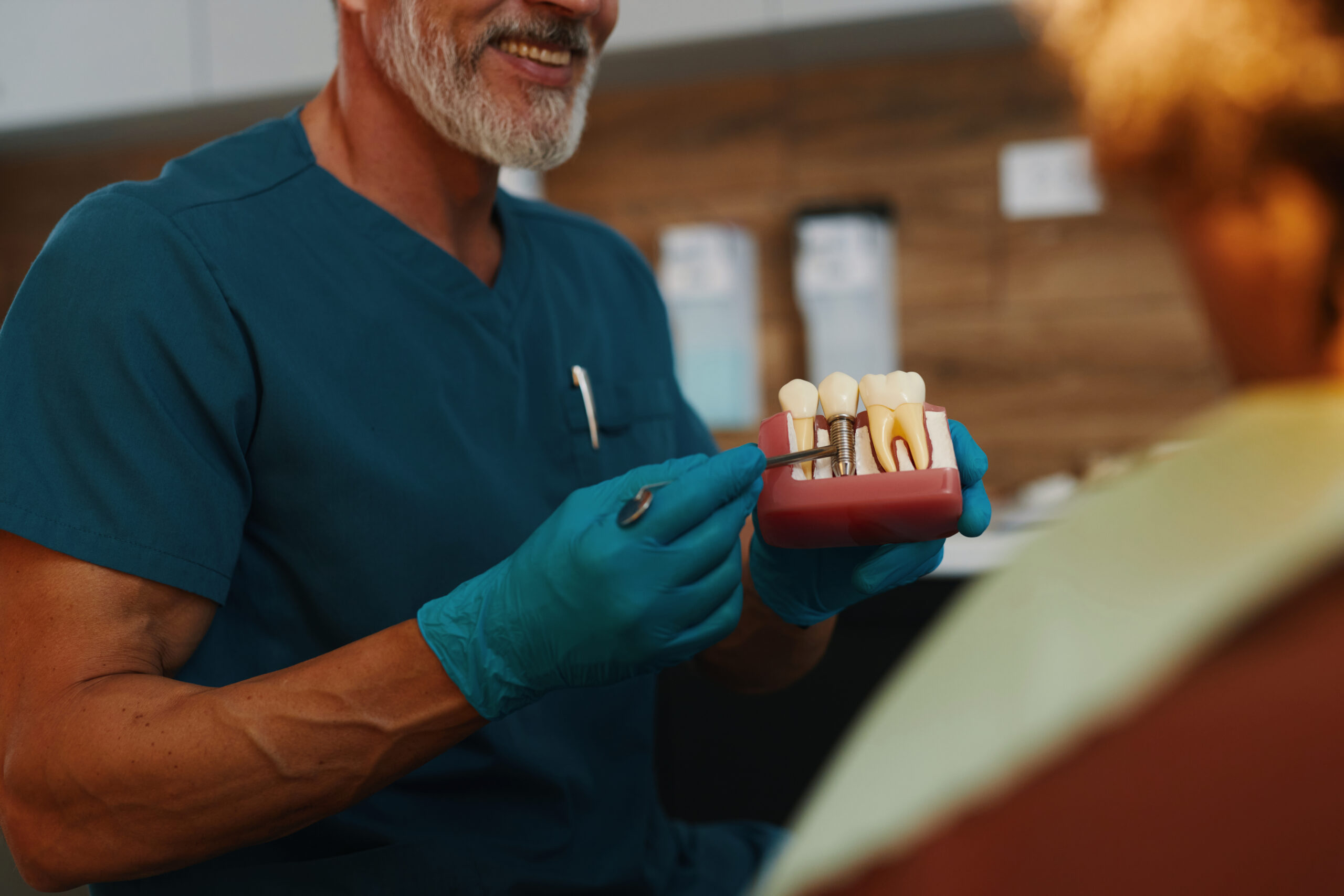
Dental implant treatment works differently because an implant replaces the root itself. The titanium post placed into the jawbone during the procedure integrates with the bone and continues to stimulate it the same way a natural root does. Bone loss is stopped. The jaw maintains its shape. The face maintains its structure.
What Implant vs Dentures Actually Looks Like Over Time
In the first year, a well-fitted denture can feel perfectly acceptable. This is where the comparison gets misleading. Patients who choose dentures feel validated early on and do not realize what is building beneath the surface.
By year three to five, most denture wearers begin noticing the fit has changed. The denture moves more during eating and speaking. Certain foods become difficult or impossible. The adhesives that were used occasionally become a daily necessity. A reline is needed to refit the base to the changed jaw shape. Then another reline a few years later. Then a full replacement.
Patients who undergo dental implant treatment at the time of tooth loss avoid this entire cycle. The dental implant results they experience a year after treatment are the same dental implant results they experience ten or fifteen years later, because the underlying structure has not changed. Brushing and flossing, regular cleanings, and the implant functions exactly like a natural tooth indefinitely.
The practical difference in daily life is significant. No removal at night, no adhesives, no restricted foods, and no moment of anxiety during a meal or a conversation. For patients who have lived with dentures for years, the adjustment to implants feels less like a dental procedure and more like getting their life back.
The Bone Loss Window Nobody Talks About
This is the part of the implant vs dentures conversation that matters most and gets discussed least.
Bone loss after tooth extraction happens quickly. The most significant reduction occurs in the first year, and it continues at a slower rate after that. The reason this matters is that dental implant treatment requires enough jawbone density to support the titanium post. The longer a patient waits after tooth loss, the more bone they lose, and the smaller the window for straightforward implant placement becomes.
Patients who wait several years with dentures sometimes find when they finally seek dental implant treatment that they now require a bone graft before the implant can be placed. A bone graft adds time and complexity to a procedure that would have been much simpler if started earlier. In some cases, significant bone loss can make certain implant options more complicated to achieve.
This is not meant to create alarm. Many patients who have worn dentures for years are still good candidates for dental implant treatment, and a thorough evaluation will clarify exactly where things stand. But it is the information that should have been part of the original conversation, before the choice was made.
For anyone in Nashua who is currently weighing these options or who has been wearing dentures and wondering whether switching is possible, a consultation focused on dental implants in Nashua will give a clear picture of what is feasible and what the process would involve.
What Dental Implant Procedures Actually Involve
One of the reasons patients avoid dental implant treatment is that the word surgery creates a picture in their mind that does not match the reality of the procedure.
Dental implant procedures are performed under local anesthesia in the dental chair. The area is fully numb before anything begins. Most patients describe the experience as involving pressure rather than pain, and the majority find the recovery manageable with over-the-counter pain relief for a day or two.
After placement, the implant spends several months fusing with the jawbone in a process called osseointegration. Once integration is confirmed, a custom crown is attached on top. From that point forward, the implant functions and looks like a natural tooth, and the patient maintains it exactly the same way.
The timeline from placement to final crown is typically three to six months depending on whether any preparatory work is needed. For patients who have been told implants take too long, it helps to compare that timeline to years of ongoing denture adjustments, relines, and replacements. The investment of a few months produces a result that does not need revisiting.
For anyone searching for a dentist in Nashua who can walk through the full picture before any decision is made, the first step is a consultation where the jaw, bone density, and current situation are assessed properly.
Patients in communities around Nashua, including Merrimack, Hudson, and Milford, who have been managing with dentures and are wondering whether dental implant treatment is still an option should know that the conversation is worth having sooner rather than later.
What to Do If You Are Still Deciding
If you currently have dentures and are wondering whether dental implant treatment makes sense at this stage, the most important thing is to find out where your bone density stands now. That single piece of information shapes everything else.
If you are still at the decision point and have not yet chosen between dentures and implants, this is the time to ask the questions that do not always come up in the initial consultation. How will your jaw change over time with each option? What do dental implant results look like five and ten years from now compared to dentures? What does the bone loss timeline mean for your future options?
For patients who have been searching for a dentist near me to have this conversation honestly and thoroughly, the answers exist. You just need the right appointment to hear them.
It Is Not Too Late to Ask the Questions You Did Not Know to Ask Before
If you chose dentures because dental implant treatment seemed out of reach, or if you are standing at that decision right now and want the full picture before you choose, Dr. Salvatore Guerriero and the team at Nashua Smile Makers are here to walk through it with you. The first step is a conversation with no pressure and no commitment. We are proudly serving Nashua and the surrounding areas. Book your consultation today.
Frequently Asked Questions
Can I switch from dentures to dental implants?
In many cases, yes. The key factor is how much jawbone remains after years of wearing dentures. A dental evaluation including imaging will determine whether straightforward dental implant treatment is possible or whether preparatory work such as a bone graft is needed first.
How long do dental implant results last compared to dentures?
Dental implants have a documented success rate above 95 percent at ten years and can last a lifetime with proper care. Dentures typically require relining every few years and full replacement every five to eight years as the jaw changes shape beneath them.
Is dental implant treatment painful?
Most patients are surprised by how manageable the procedure is. Local anesthesia ensures the area is fully numb during placement. Post-procedure discomfort is typically mild and resolves within a day or two for most patients.
What happens to my jawbone if I keep wearing dentures?
Bone loss continues as long as there is no root stimulation in the jaw. Over time, this changes the fit of the denture, alters facial structure, and can narrow the window for future dental implant treatment. Starting dental implant treatment earlier preserves more bone and produces a simpler procedure.