76 Allds St, Nashua, NH 03060
By Nashua Smile Makers | October 8, 2026
Getting a tooth removed is only the first step toward restoring your oral health. What you do afterward can significantly affect your comfort and healing.
At Nashua Smile Makers, Dr. Colletta helps patients understand proper recovery practices and how to avoid preventable complications. Following the right precautions can reduce discomfort, protect the extraction site, and support healthy tissue repair.
If you recently had a tooth extraction, it’s essential to know what to avoid during the first few days.
Why Is Aftercare Important Following Tooth Removal?
After a tooth is removed, a blood clot forms inside the empty socket. This clot protects the underlying bone and nerves while new tissue develops.
Disrupting this clot can lead to a painful condition called dry socket, also known as alveolar osteitis.
Proper tooth extraction aftercare helps:
- Protect the blood clot during early healing.
- Reduce irritation, bleeding, and swelling.
- Lower the risk of dry socket.
- Support healthy gum tissue recovery.
- Prevent unnecessary delays in healing.
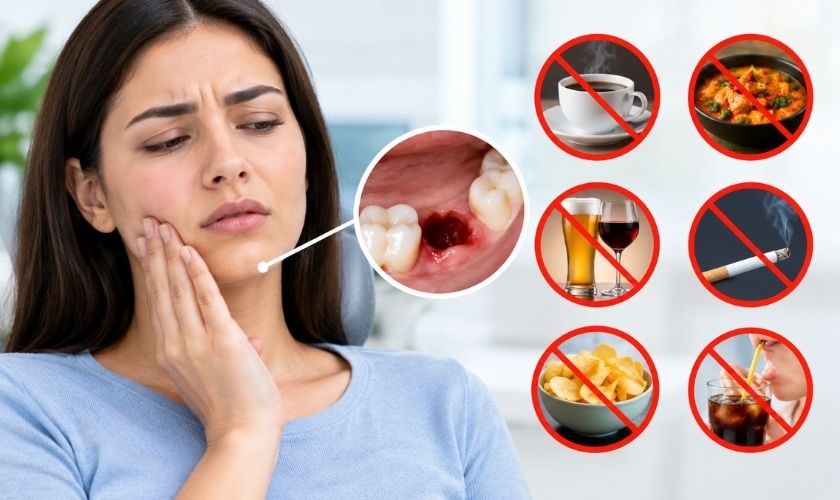
Things to Avoid After Tooth Extraction
1. Avoid Smoking, Vaping, and Tobacco Products
Smoking is a major risk factor for dry socket. Suction, heat, and tobacco chemicals can interfere with normal healing.
Avoid smoking and vaping for at least 72 hours, preferably longer. Nicotine can restrict blood flow, making tissue repair more difficult.
2. Do Not Drink Through a Straw
Using a straw creates suction inside your mouth. This pressure may dislodge the protective blood clot.
Avoid straws for at least the first 24 – 48 hours, or longer if instructed. Drink water directly from a glass instead.
3. Avoid Hard, Crunchy, and Sticky Foods
Crunchy foods can irritate the surgical area or leave particles trapped inside the socket. Sticky foods may also disturb healing tissues.
Avoid chips, popcorn, nuts, hard candy, and chewy snacks during early recovery.
Choose softer alternatives, including:
- Mashed potatoes and scrambled eggs.
- Yogurt and applesauce.
- Lukewarm soups.
- Soft pasta and oatmeal.
Gradually return to your normal diet as you feel comfortable.
4. Do Not Rinse or Spit Forcefully
Vigorous rinsing or spitting can disturb the blood clot during the first 24 hours.
After this period, gentle warm saltwater rinses may help keep the area clean. Avoid aggressive swishing, and let the liquid drain naturally from your mouth.
5. Avoid Strenuous Exercise and Heavy Lifting
Intense physical activity increases blood pressure and may restart bleeding at the surgical site.
Avoid strenuous workouts, running, and heavy lifting for at least 24 hours. More complicated procedures may require additional rest.
Gradually resume physical activity as your dental team directs.
6. Do Not Touch the Extraction Site
Touching the socket with your fingers, tongue, or other objects can irritate healing tissue.
Avoid repeatedly checking the area or attempting to remove the blood clot. Continue brushing your other teeth carefully without disturbing the surgical site.
If you notice unusual discomfort after tooth extraction, visit our dental office for an evaluation.
7. Avoid Alcohol During Early Recovery
Alcohol can irritate healing tissues and may interact with prescribed medications.
Avoid alcoholic beverages for at least 24–48 hours, and longer when medications or recovery instructions require it.
Water is a safer choice for maintaining hydration during the initial healing period.
8. Do Not Eat or Drink Extremely Hot Items
Very hot foods and beverages may increase bleeding or irritate sensitive tissues.
Avoid hot coffee, tea, and steaming soups immediately after your procedure. Choose cool or lukewarm foods until the area becomes more comfortable.
Wait until the numbness wears off before chewing to prevent accidental bites.
9. Never Ignore Persistent Pain or Unusual Symptoms
Mild swelling, tenderness, and slight bleeding can occur after a tooth extraction. However, worsening symptoms deserve prompt attention.
Contact your dentist if you experience:
- Severe pain that develops or worsens after two to four days.
- Bleeding that continues despite firm pressure from gauze.
- Fever, pus, or worsening facial swelling.
- Persistent unpleasant taste or odor.
- Difficulty swallowing or breathing, which requires emergency care.
Early evaluation can help identify complications before they progress.
How Long Does Tooth Removal Recovery Take?
Initial gum healing generally takes 1 to 2 weeks, though recovery varies by procedure and individual health.
Most patients notice improvement in tenderness and swelling within several days. Deeper bone healing takes considerably longer.
Follow the dentist’s instructions regarding medications, oral hygiene, food choices, and follow-up visits.
Protect Your Smile With Proper Aftercare
Following the right precautions after a tooth extraction can make recovery more comfortable and reduce preventable complications. Small decisions during the first few days can make a meaningful difference.
At Nashua Smile Makers, we help patients understand their recovery needs and recognize symptoms requiring attention. If you need guidance about tooth extraction, book an appointment with our dental team for an evaluation and personalized aftercare recommendations.
Frequently Asked Questions
1. What should I avoid during the first 24 hours?
Avoid smoking, straws, vigorous rinsing, alcohol, and strenuous exercise. Protecting the blood clot is the main priority during this period. Follow your dentist’s specific recovery instructions.
2. How can I prevent dry socket after tooth removal?
Avoid suction, tobacco, and touching the surgical area. Maintain oral hygiene without disturbing the socket. Contact our dental provider if pain worsens.
3. When can I eat normally again?
Many patients gradually resume regular foods within several days. Start with soft meals and chew away from the healing area. Avoid crunchy foods until chewing becomes comfortable.
4. Is it normal to experience swelling after the procedure?
Mild swelling is common and may peak during the first two or three days. Cold compresses can help during early recovery. Seek evaluation if swelling worsens or is accompanied by fever.
5. Can I brush my teeth after the procedure?
You can generally clean unaffected teeth carefully. Avoid brushing directly over the socket during the first 24 hours. Resume gentle cleaning near the area as your provider directs.
6. When should I seek dental care after tooth removal?
Contact our dentist if you have worsening pain, persistent bleeding, fever, or unusual discharge. These symptoms may indicate complications requiring treatment. Prompt evaluation can protect your oral health.