
76 Allds St, Nashua, NH 03060
By Nashua Smile Makers | September 4, 2026
A damaged, weakened, or heavily worn tooth may need extra support to restore its function and appearance. Dental crowns are custom-made restorations that cover a prepared tooth, helping protect it while restoring its shape and strength. Crowns may also be used after root canal treatment or to restore certain teeth supported by dental implants.
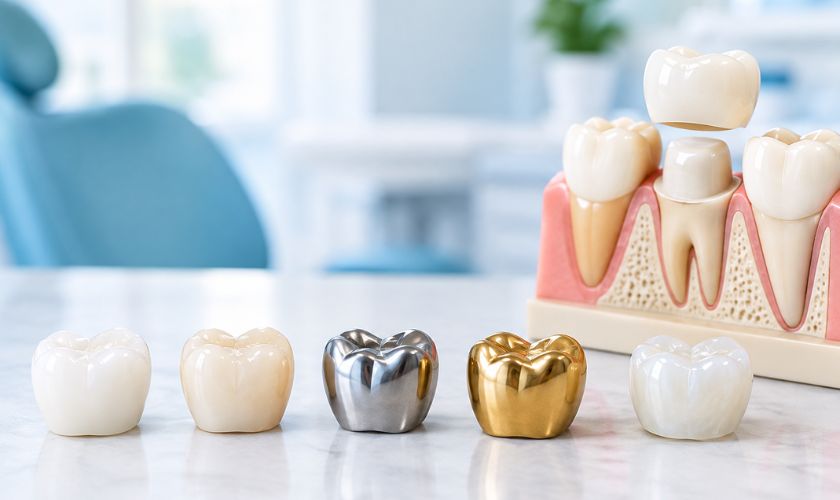
With several materials available today, understanding the different types of dental crowns can help you have a more informed conversation about your treatment options.
Metal Dental Crowns
Metal crowns are made from dental alloys and are known for their strength and durability. They can withstand substantial chewing forces and generally require less removal of healthy tooth structure than some other crown options.
Because of their metallic appearance, they are often considered for back teeth where appearance is less noticeable. Gold and other metal alloys have a long history of use in restorative dentistry.
Porcelain-Fused-to-Metal Crowns
Porcelain-fused-to-metal, or PFM, crowns combine a strong metal foundation with a tooth-colored porcelain exterior. This combination offers a balance between strength and appearance.
PFM crowns can be used on both front and back teeth. However, the porcelain layer can sometimes chip, and a darker line near the gum may become visible in some situations as the gum tissue changes over time.
All-Ceramic and Porcelain Crowns
All-ceramic crowns are made without a metal substructure and are valued for their natural appearance. Their ability to mimic the color and translucency of natural teeth makes them an appealing option for visible areas of the smile.
Different ceramic materials have different levels of strength and translucency, so the ideal choice depends on factors such as tooth location, bite forces, and cosmetic expectations.
Zirconia Crowns
Zirconia is a ceramic material recognized for its high strength and durability. It can be used for crowns in both visible and high-chewing-force areas, depending on the specific zirconia formulation and clinical situation.
Modern zirconia materials also offer improved translucency compared with earlier versions. However, greater translucency and strength can vary among different zirconia products, making professional material selection important.
Pressed Ceramic Crowns
Pressed ceramic crowns use a ceramic core that is formed under controlled heat and pressure before additional layers may be added. These crowns can provide a combination of strength and natural-looking aesthetics.
They may be considered for certain front and back teeth, depending on the condition of the tooth, bite, and desired appearance.
Resin Crowns
Resin-based crowns can provide a tooth-colored appearance and may be used in selected situations. However, resin generally has lower strength and durability than many ceramic or metal alternatives. For this reason, resin materials are also commonly used for temporary crowns rather than long-term restorations.
Choosing the Right Crown for Your Tooth
There is no single crown material that is best for every patient. The location of the tooth, amount of remaining tooth structure, bite pressure, cosmetic goals, oral health, and material characteristics all play a role in the decision.
A dentist may recommend one option for a front tooth where appearance is especially important and another for a molar that experiences significant chewing forces. A personalized evaluation can help determine which restoration provides an appropriate balance of strength, function, and appearance.
For patients considering a dental crown in Nashua, discussing these factors with the dental team can make the treatment decision easier and more understandable.
Caring for a Dental Crown
A crowned tooth still needs regular oral hygiene. Brush twice daily with fluoride toothpaste and clean between the teeth every day. Routine dental examinations can also help monitor the crown and the surrounding teeth and gums.
Avoid using crowned teeth to bite hard objects such as ice or pens, since excessive forces can damage restorations. With appropriate care, many crowns can remain functional for many years.
If you have a damaged or weakened tooth and want to understand whether a crown may be appropriate, Contact Us to discuss your concerns. The team at Nashua Smile Makers can evaluate your tooth and explain suitable restorative options based on your individual needs.
Frequently Asked Questions
- What is the strongest type of dental crown?
Metal and zirconia crowns are known for their strength. The best choice depends on the tooth being restored, bite forces, available tooth structure, and appearance goals rather than strength alone.
- Are porcelain crowns good for front teeth?
Porcelain and other all-ceramic crowns can provide a natural appearance because they closely mimic tooth color and translucency. They are often considered when aesthetics are an important treatment goal.
- How long can a dental crown last?
A crown can last many years with proper care, although its lifespan varies based on material, oral hygiene, bite forces, tooth location, and other factors. Regular dental examinations help monitor its condition.
- Can crowns be placed after a root canal?
Yes. A crown may be recommended after root canal treatment when additional protection is needed. The restoration helps cover and support the treated tooth, depending on its remaining structure.
- Are zirconia crowns suitable for molars?
Zirconia can be suitable for molars because many zirconia formulations provide high strength and resistance to chewing forces. The specific material should be selected according to the tooth and bite.
- Can a crown look like a natural tooth?
Yes. Several modern ceramic materials are designed to closely resemble natural teeth. Shade, translucency, shape, and the position of the tooth all influence how natural the finished crown appears.
- How should I care for a dental crown?
Care for a crown much like a natural tooth by brushing twice daily, cleaning between teeth, and maintaining regular dental visits. Avoid biting very hard objects that could damage the restoration.
